Behavior – fear and aggression to strange people, animals and the vet
September 2nd, 2010
Dear Your Own Vet,
I have been searching for information on my adopted male long haired sable colored dachshund. He is supposedly a mini, but more midi neutered male. He had many strange behaviors when we got him which surprised me. The first trip to the vet he seemed to “scream” in pain and lost control of his anal glands producing a very nasty smelling material. He gets full of burdocks, seems to get sick if he tries to chew them off of himself, but will sit for over an hour when I slowly remove them from his long hair. He barks at people when they leave or arrive (closing door?) but we have slowly trained him not to. We have had him for almost two years and he was just one when we adopted him.
His owner was going through marital problems and I guess the dog was banned from his house. He seems to do this “scream” on certain occasions, when picked up, when his leash got gently wrapped around a short growing plant like cut corn stalks, he freaked out when I picked up a stick. He was with young children, tormented by a cat when tied up, and I wonder about many of his behaviors and what they stem from. He was transported from the breeder to his original family by someone else, was the last left in the litter, and when I finally got the name of the breeder, she did not seem very willing to talk, and I asked about the parents. She said his father was a good hunter but she got rid of him when one puppy had a genetic disorder, the name of which I cannot remember.
Hank allows his nails to be trimmed with no problems, seems dedicated and loving, has gotten used to our cat (took a year) and immediately enjoyed the company of our 6 year old standard black and tan smooth female. The cat and both dogs are about the same size. Hank immediately became dominant to our female and we had a few skirmishes over animals that were “caught”. They pulled a squirrel in half. Yikes. I know they are hunters, diggers and very brave with raccoons, woodchucks, etc. Any help, or suggestions are greatly appreciated. I love my “baby” and he has plenty of yard (40 acres) away from cars which he does not like! We walk the woods on leash and most of the time he stays in the mowed area we call our yard. Can you explain this unusual behavior he shows?
Thanks again,
Jeanne
Dear Jeanne,
The first trip to the vet was not a happy experience when he lost control of his anal glands. This usually is related to extreme fear. To sort that out, you need to take him to the vet for no reason at all so that he learns that going to the vet is not a bad thing. When you get there get the assistants to give him a treat and lots of praise and then go home.
It is good that you are able to remove the burdocks from him – many dogs don’t like this being done.
He seems to have had a problem upbringing in his previous home. Unfortunately, this will impact on his behaviour now. A dog’s most impressionable time is up to four months. Later in life a dog can revert back to these memories, but a new life and good handling will always help. It takes time!!
You also mention that the breeder was not willing to talk – this is not good as obviously there a problems with the lines as well – so genetics are coming to play as well.
At least he has calmed down and is used to your cat, and sadly, dogs can be hunters and will catch birds etc. I would suggest that you put a bell on his collar which will warn the animals when he is chasing them.
I would suggest that you give him some rescue remedy or a homeopathic or natural calmer for dogs if and when he needs it. This is great for calming, helping with stress and any other problems that are bothering him.
Regards,
Kathy Clayton
Accredited Companion Animal Behaviourist &Professional Dog Trainer
www.yourownvet.com
+2711 783 3042 +2782 454 1750
kcdogs@global.co.za
www.kcdogschool.co.za
http://www.kcdogs.stemtechbiz.com
Question and Answer – Diabetes
August 30th, 2010
Dear Your own Vet,
My cat was diagnosed with Diabetes mellitis yesterday. She now will not eat and is in a kind of a coma. What do I do? Please help?
Kaitlyn King
Dear Kaitlyn,
HOW DOES DIABETES MAKE MY PET SICK?
WHICH PETS ARE AT RISK FOR BECOMING DIABETIC?
HOW DO I GIVE INSULIN INJECTIONS TO MY PET?
WHAT DO I DO IF MY PET ON INSULIN GOES INTO A COMA OR LOOKS WEAK AT HOME?
GENERAL CARE OF THE DIABETIC PET
WHAT IS DIABETES?
Diabetes mellitis is a disease where the body cannot move sugar out of the blood into the cells where it is needed. Blood sugar sits normally between 3 and 5 mmol/l but can increase in stress situations (especially in cats) to up to 10 mmol/l and still be considered normal. Most diagnosed insulin dependent diabetics have blood sugar levels over 18 mmol/l and up to over 30 mmol/l when diagnosed. There are two forms of diabetes in animals:
1. Due to a lack or shortage of insulin.The pancreas ( a small organ lying behind the stomach) produces insulin. Disease of the pancreas such as pancreatitis can damage the pancreas. Sometimes the immune system attacks the insulin producing cells in the pancreas, which makes them stop working and in some cases we don’t know why the pancreas stops making insulin. Think of insulin as a taxi that drives sugar from home to work. Without insulin, sugar can’t get to work inside the cells and sits in the blood, getting higher and higher.
2. There is enough insulin but the body develops “insulin resistance.” The body no longer recognizes normal levels of insulin and thus won’t allow glucose to be moved into the cells.
HOW DOES DIABETES MAKE MY PET SICK?
If the body can’t get access to the sugars it needs for energy, your pet will feel lethargic and hungry at the same time. He will start to eat a lot more than he used to, but despite eating more, the sugar from the diet still can’t get to where it is needed to do it’s job of providing energy.
The body feels like it is starving so it starts to break down fat for energy. The fat gets broken down and then released into the bloodstream to travel to the liver. To get the energy out of fat, the liver has to extract the fat from the blood and turn it into energy. The liver is only able to process a certain amount of fat per hour, as it works quite slowly. When the body breaks down fat faster than the liver can handle it, the excess fat doesn’t get changed to energy, but to acetone like chemicals called ketone bodies that get released into the bloodstream. These ketone bodies are very acidic. The acid in the body is very unhealthy as the body can only work at a neutral pH. If the body becomes too acidic, it stops working and animals are in danger of falling into a coma from a combination of no energy and a very acidic body pH. This is called a ketoacidotic coma and is very hard to treat. Fat can also be absorbed by the liver faster than it can process and thus the liver tries to store the fat in the liver. The fat in the liver can build up to the point where the liver can’t work properly anymore. See our article on fatty liver syndrome and the treatment thereof: Liver Disease in Pets
Pets can also get dehydrated when they collapse because, with Diabetes mellitis, the urine becomes very dilute as the extra glucose in the blood gets filtered into the urine and draws water to itself by osmosis. Cats can develop diabetes and “self cure” themselves after being on insulin for any period of time. Dogs are permanent diabetics and never get better.
SYMPTOMS OF DIABETES IN PETS
- Drastic weight loss
- Animals eat as if they are starving all the time and may steal food from the table or dustbin
- Animals are very thirsty, drinking all the time
- Urine is very watery and if dried up, feels sticky
- Animals begin to wet indoors and have night time “accidents”
- Dog’s eyes look glassy or blind as they develop cataracts from the high sugar.
- Sudden collapse and weakness of the legs
- Lethargy
- Vomiting
- Stinky breath or Halitosis (Ketone bodies on the breath can only be smelled by some people)
- Coma
The symptoms are listed in the order they usually appear as the disease progresses. It is unusual for a perfectly healthy pet to go into a coma overnight. They usually show changes in appetite, water consumption as well as weight loss before they become deathly ill. It is unfortunate that people who have obese pets and have them on diet to try lose the weight often see the weight loss as a good thing and are used to their pets eating night and day, so these initial symptoms may go unnoticed until the animal is quite ill already.
DIAGNOSIS OF DIABETES
A blood sugar that is very high ( usually over 18 mmol/l but can be lower) and urine that is dilute and has glucose in the urine as well as ketone bodies in the urine leads to a positive diagnosis of diabetes.
HOW IS DIABETES TREATED?
Treatment of Diabetes mellitis depends on the type of Diabetes. A diagnosis of uncomplicated diabetes is NOT a good reason to put your pet to sleep/euthanize your pet.
If your pet is still happy, running around and eating then the Diabetes is called:
UNCOMPLICATED DIABETES
Your pet will usually be admitted to the vet for about three to four days. He/she will be given a different diet (low calorie diet). These diets contain fewer simple sugars and fats and higher fiber so that the energy and sugar from them gets released slowly into the blood, allowing the body to process them all easily without blood sugar suddenly going very high, then low again after the insulin shot. Certain pet food manufacturers make diabetic foods specifically for this purpose. Some very mild diabetics may be controlled with diet alone but this is rare.
Your pet will be started on insulin injections. These injections are given at least twice a day, and the blood sugar is tested every 2-3 hours after the injections. Your vet will then construct a graph known as the glucose curve. It is expected that the sugar will start to drop about 2 hours after an insulin injection. Your vet will plot a graph to see if the sugar is going low enough or too low and adjust the insulin accordingly.
There are three types of insulin: Long acting, medium acting and short acting. Long acting insulin injections are created to be given once a day. It has been found that these insulin injections don’t stabilize the pets as well as the medium acting insulin which is preferred in dogs and cats. Medium acting insulin is given twice daily and is the most common type sent home with pet owners. Short acting insulin is usually given in hospital when a patient is very ill and insulin has to be given frequently to stabilize her.
Insulin comes from three sources: Beef, Porcine (from the pancreas of animals slaughtered at abattoirs) and Artificially created insulin. There is a worldwide trend to replace Beef and Porcine insulin with Artificial Insulin as humans with diabetes tend to start building up resistance to the insulin from other animals over time. The artificial insulin on the market tends to be mostly geared towards treating Human Diabetes, but many dogs and cats do very well on Human Insulin. Cats that don’t respond well to Human Insulin can use Glargine Insulin, which is more suitable for their bodies.
In the simplest cases, your vet will find the correct level of insulin and discharge your pet, with specific instructions as to how to inject him at home. Pets don’t respond well to human tablets for Diabetes as most pets with Diabetes mellitis are insulin dependent – in other words, they can only be treated with insulin injections.
Some animals develop cataracts from Diabetes, especially if it is not well controlled. Once the lenses in the eyes have hardened, it is unfortunately an irreversible change and they may need surgery to replace the lenses at a later stage.
Insulin Resistance: Some pets have insulin resistant Diabetes mellitis. These pets will only respond slightly to the insulin injections or not at all. Your vet will need to try various types of insulin to find one that does work for these pets and they also may end up being on a very high dose of insulin in order for it to be effective. It is very important to stick to the correct calorie controlled diets with these pets as this will help a lot in keeping blood sugar stable. Animals, especially cats with insulin resistant diabetes can be suffering from Cushing’s disease and should be checked for that.
COMPLICATED DIABETES
Complicated diabetes is often a medical emergency. Animals come into the hospital very ill, collapsed or dying. They can be suffering from Diabetes mellitis alone but can also be admitted with secondary problems such as infections in their urinary tract, dehydration and kidney disease or failure, fatty liver syndrome and jaundice, They can also have a disease that caused diabetes in the first place such as Cushing’s Disease (Hyperadrenocorcticim). See our article on Cushing’s disease: Cushing’s Disease
Ketoacidotic diabetes is an emergency as the acid in their bloodstream can send them into a coma quickly. Treating these animals often has a poor outcome unfortunately, but with good care and nursing, I have seen some animals get better and go on to lead normal lives afterwards. These animals need:
- Fluids – not ringers lactate (too acidic). Saline is fine and if your vet can do acid base measurements at their facility or laboratory, they might add bicarbonate to neutralize the acid. It is dangerous to do this without measuring the acid-base first. Saline will flush out some of the excess sugar and excess acid.
- Insulin – to get the blood sugar back to normal. In bad cases the insulin can be given in the drip or in small amounts through the day to keep the levels constant. Short acting insulin is best for these severe cases. Only when the blood sugar gets to normal, will the body stop producing the ketone bodies.
- Blood sugar monitoring every 2 hours and a glucose curve plotted.
- Pets should be kept warm as these animals have difficulty maintaining core temperature.
- Animals should receive feeding – if they are too weak to eat, a tube can be passed through their nose or esophagus down to the stomach to syringe food into at least 3-4 times daily. This works better than oral syringe feeding.
- A full blood count and blood chemistry need to be taken to check if the liver or kidneys are affected by the diabetes as well as to check the potassium levels in the blood. With insulin therapy, potassium levels can go too low, which can make pets very weak and not eat and even go into a coma. Supplement potassium in the drip if need be. Most diabetics have raised liver enzymes, especially ALP (Alkaline phosphatase) – see our article on liver disease. Liver Disease in Pets. If the liver function is affected though (check the serum bile acids) or your pet is jaundiced, then they need potassium in the drip and strict feeding at least 4 times a day. Animals that are dehydrated and have elevated kidney function tests (urea, creatinine)(see our article on kidney failure. Kidney Failure These animals need to be kept on a drip for three days and then retested to see if the kidney function tests have normalized.
- Any secondary infections need to be treated with antibiotics. Vitamin B supplementation can help stimulate appetite in recovering animals.
- If the animal does not respond to insulin, he/she needs to be checked for Cushings disease and treated for that.
The general aim is to get the blood sugar back to normal, which will stop the body producing the Ketone bodies, which will normalize the pH. If animals have normal sugar and normal pH they feel better, start to eat and can be discharged a few days later on insulin therapy and special diets.
WHICH PETS ARE AT RISK FOR BECOMING DIABETIC?
Animals that are overweight to start with tend to have a higher risk of Diabetes. This is why it is important to watch your pet’s weight carefully.
Labrador Retrievers are often diagnosed with Diabetes and females get it slightly more often than males.Fat cats of any breed are predisposed but I have seen Siamese cats get diabetes more often than other breeds.
HOW DO I GIVE INSULIN INJECTIONS TO MY PET?
- Your vet or pharmacist will give you insulin in a bottle or vial. Keep this bottle in the fridge, even if you live in a cold climate. Insulin needs to be kept at the same temperature all the time, so if it is a hot day when you collect your insulin, your vet may give you an ice pack to keep it on and you should go straight home and refrigerate it. Never leave it on a shelf and put it away and few hours later!!!
- Do not shake your insulin. This will destroy it. A powder like substance may settle at the bottom of the bottle. You may turn the bottle over a few times to mix it.
- Turn the bottle upside down to draw the insulin out with the needle.
4. Find out the exact number of units your pet needs and write it down!!
5. There are 2 general sizes of insulin syringes that are given out for pets – 1/2 ml and 1 ml. Don’t get the wrong syringes. Always take your old syringe with and make sure your new ones are the same size – this is important as the markings on the bigger size may lead to you double dosing your pet and even killing her!
6. Insert the needle through the rubber stopper. Draw the insulin back past the point your pet needs and then flick the syringe with your finger to remove air bubbles. (Don’t panic if you accidentally inject your pet with an air bubble, they don’t die from this.) Push the syringe stopper back to the number of units your vet has shown you. Remove the syringe from the bottle and put the bottle in the fridge.
7. You can inject your pet anywhere under the skin or in the muscle on her body. Try to vary the place you inject once you are used to it as the skin can become hard otherwise. Lift the skin so it forms a triangle shape with a pocket underneath and inject into the pocket. You must push the needle through the skin first before depressing the plunger. When you first start, ask your vet to shave the hair off in one place so you can see what you are doing more easily.
8. If you think some of the insulin has come out but some has gone in, phone your vet for advice. NEVER repeat the full dose.
9. If your pet is ill or didn’t eat his meal, only give half the insulin that day. If your pet is still not better by the evening, rather take him in to the vet. People often wait a day or two to see if their pet gets better but THIS DOES NOT apply to diabetics. They need to be taken into the vet if they have missed more than 1 meal or eaten only half of two consecutive meals at the latest.
WHAT DO I DO IF MY PET ON INSULIN GOES INTO A COMA OR LOOKS WEAK AT HOME?
This can happen if you give too much insulin, or your pet hasn’t eaten and you still give the same dose of insulin as normal. It can also happen with cats who can spontaneously “cure” themselves of diabetes and forget to remind their owners of the fact that they are now back to normal and the owner gives the insulin as usual.
Symptoms of Insulin Overdose:
- Your pet starts to eat voraciously about 2 hours after the insulin injection
- Your pet looks weak and stumbles or staggers about 2-6 hours after the insulin injection
- Your cat makes weird crying noises and just lies there and won’t move
- Your pet’s pupils are very constricted or very dilated
- Your pet is in a coma and can’t be woken up
- Your pet is cold and won’t move
- Your pet doesn’t recognize you or it’s name and seems very disorientated.
First aid at home for insulin overdose and on the way to the emergency vet:
- SUGAR , SYRUP or HONEY given orally or in water in syringe. Continue this till you get there
- Make sure your pet is warm. If he feels freezing give him a hot water bottle or wheat germ pad (wrapped in a towel) to lie on on the way to the vet.
Once you are at the vet, your vet will insert a catheter into his vein, check her blood sugar and possibly give dextrose drip intravenously. Your pet will be admitted and treated and a blood sugar curve done the next day to check the insulin levels she is getting are correct.
GENERAL CARE OF THE DIABETIC PET
- Low calorie diet only. No table scraps, no gravy from the Sunday roast, no starches (no rice, fats, oils, biscuits, cakes, chips, bread, french fries, sweets, grits, maize meal, couscous, wheat flour or cereals, or potatoes in any form.) An animal diabetic should avoid the same foods a human diabetic would. It is best to keep them on prescription or low calorie pet food with only low calorie treats (such as rawhide bones and hooves) for life.
- Look after your insulin. It is expensive to neglect.
- Your pet should go in for blood sugar monitoring for the day a week after being discharged from hospital and then every 2-3 months for life. Thus your vet can pick up if your cat is “self curing” or not.
- Sick diabetics must go to the vet asap. Don’t wait.
- Your pet should have his/her kidneys and urine tested at least once every 6-12 months depending on how old they are. Older animals should be tested more often.
- Don’t miss a day of insulin. If you are going on vacation, make sure your pet sitter knows what to do and buy extra insulin in advance. In fact, it is preferable if your pocket allows to board your pet at a facility where they are familiar with diabetics.
- Monitor your pet’s eyes for any sign of cataracts forming, see our eye article on cataracts and how to treat them.
Good luck and let me know how she does
Dr Claire Demmer
MRCVS
BVSc (Hons)
www.yourownvet.com
Behavior – Cat messing in bath and sink
August 19th, 2010
Dear Your Own Vet,
I came across your website in a desperate Google search and I am hoping you can help me.
My husband and I foster kittens for a local no kill shelter. We have brought and adopted out about 30 kittens so far from our home. However, last year we took one in we called Luke. He was always more aloof than most. When we would take him to the adoption center, he would start to hiss, spit, and fight with his brother and sister. After he started biting people who tried to adopt him, we had no choice but to no longer show him at the adoption center.
For the past year, he has taken to defecating in our bathtub and bathroom sink. We had other kittens that had done this before but always grew out of it. He is over a year old now. The odd thing is, whenever I go out of town and just my husband is home, he never goes outside of the litter box. I have tried everything to get him to go inside the litter box when I am home but nothing seems to be working.
Is there anything we can do to calm him so he can go to the adoption center as well as stop him from going in the bath tub and sink when I’m home? We used the calming spray but it doesn’t seem to help and our vet said there is nothing physically wrong with him. Any help would be so appreciated.
Thank you,
Helena Squier
Dear Helena,
Thanks for contacting me about your problem with Luke. He really does have a problem and it is quite a difficult one. When cats soil they are really not happy; and he is obviously not happy when around other cats.
With regard to the litter tray, do you have enough around? Some cats do not want to use a communal tray and I always suggest that you almost have one tray per cat per household. You can also try changing the actual cat litter. Some cats are fussy with what they feel underneath their feet. My cat which has just passed on, would only go on ultra fine litter.
Also look where the tray is placed, if it is in a very busy area, some cats do not like this. To try and stop him from using the bath, put the litter tray in the bath. Alternatively, keep some water in the bath and sink at all times to discourage him from going in there.
Also make sure that the tray is not anywhere near the feeding area.
You mentioned that you had used a calming spray – was it Feliway? This pheromone is usually very good in multi cat households, helping to calm stressed cats. You should be able to get it online at some of the suppliers that advertise on this website.
You could also try giving him some rescue remedy. Here in South Africa we have a special homeopathic range for pets. I would suggest EcoFear (as this has rescue in it) to help with the stress.
Regards,
Kathy Clayton
Accredited Companion Animal Behaviourist &Professional Dog Trainer
www.yourownvet.com
011 783 3042 082 454 1750
kcdogs@global.co.za
www.kcdogschool.co.za
http://www.kcdogs.stemtechbiz.com
Distemper in Dogs
August 16th, 2010
Dear Your Own Vet,
I have a 8 month old mastiff/lab mix called Floyd. Lately he has been sniffing my other dog’s urine and has been having these weird facial seizures which also cause him to drool. What is the cause of these seizures and what can I do to stop them from happening?
The fits looks like my dog is chewing gum, but his teeth also chatter and he drools while its happening. I feel so bad and never know what to do. He is up to date on all of his shots, but I think he got the first puppy ones when he was about 6 or 7 months old cause I was at school with him. When I bought him they gave him a Univac 7 shot that I was told would prevent Distemper.
Also, my other dog Bandit just started having these seizures. Could it be contagious? He’s never had them until I brought Floyd home. Bandit’s seizures look like Floyd’s, but his body also quivers. Floyd’s been having these seizures daily, and sometimes on more than once. I wouldn’t say they have gotten worse, but they kept getting longer for a while until it stayed around the same length of time. Bandit’s only had it happen 3 or 4 times a month.
Thanks!
Trent
Dear Trent,
Facial seizures or “chewing gum” fits look like a big muscle pulsing in the face on and off, often above the eye by the temple, and it can be on both sides. Some dogs can drool and have teeth chattering as well. “Chewing gum fits” are most commonly caused by the Distemper virus, but can also be a form of localized epilepsy, or meningitis as well as muscle diseases. If it is distemper it is unlikely that he will ever stop doing that as it is from permanent nerve damage. Sometimes the symptoms get worse though.
WHAT ARE THE SYMPTOMS OF DISTEMPER?
WHAT IS DISTEMPER?
Distemper is a virus (Morbillivirus) that is related to human measles. It infects dogs and their relatives as well as some other species, such as ferrets. Cats cannot get canine Distemper and what the public knows as Feline Distemper is an unrelated virus, which is more like Parvo virus than Canine Distemper. Distemper affects more than one place in the body at the same time. It affects the immune system, and suppresses the body’s ability to fight off infections which often leads to the respiratory system getting affected – dogs can develop pneumonia as well as constant pussy discharge from their noses and eyes. Dogs also get diarrhea in the early stages of Distemper, as it affects the gut with immunosuppression. Dogs can get a conjunctivitis (the membranes of the eyes are infected) causing pus to accumulate in the corners of the eyes. Finally, it hits the nerves and the brain, stripping the protective myelin sheath off the outside of the nerves and attacks the white matter in the brain, leading to twitching and spasms, which can progress to full blown seizures and death.
There is usually 1-2 weeks from time of exposure to development of initial clinical signs (incubation period), but it can be as long a 4-5 weeks or even more. Occasionally neurological signs develop months after exposure in dogs that never showed initial signs of infection. The fever spikes 3-6 days post-infection, obvious clinical signs are seen between 1-4 weeks after infection (longer incubation more common), and nervous signs signs may appear up to 3 months later with or without preceding signs. (2) Dogs shed the virus for 5-7 weeks in the urine and feces. (3) Distemper is transmitted in any bodily fluids, such as urine, saliva and nasal discharge. Distemper is found all over the world, but is more prevalent in third world countries, or where people don’t vaccinate their dogs strictly.
WHAT ARE THE SYMPTOMS OF DISTEMPER?
I have listed these in the order they usually appear as the illness progresses, but each dog is different. Some dogs show most of the signs and some dogs only one or two. It depends on the dog’s immune system at the time – for example if they have had some vaccines, or if they received some protection from their mother through the milk, they are more immune and fewer signs would be seen than a dog that had never been exposed to Distemper before and had no protection from it’s parent. (Maternal antibodies to disease only last for the first few weeks of a pup’s life and then wear off, which is why puppies are vaccinated three to four times between 6 and 16 weeks of age)
- An unexplained high fever that does not respond to antibiotics and keeps coming back.
- Lymphopaenia (low numbers of white blood cells known as Lymphocytes, which are produced in the glands)
- Diarrhea and vomiting
- Pneumonia with soft cough
- Dog is thin and in poor condition
- Pustules on the skin
- Depression and innapetance
- Pus in the corners of the eyes (Conjunctivitis and Dry eyes)
- Cloudiness of the eyes (Anterior Uveitis)
- Blindness and sensitivity to light (3)
- Pussy discharge from the nose
- Hardpad – the nose and the pads of the feet become thickened (not that common)
- Enamel hypoplasia – dirty brown marks on the teeth where enamel didn’t develop if a pup gets distemper while teeth were developing in the gums.
- Twitching of the muscles of the face (chewing gum fits)
- Twitching of the leg muscles
- Seizures
- Aimless wandering
- Death
- Old dog encephalitis
DIAGNOSIS OF DISTEMPER
Distemper is tough to diagnose. You have to test at the correct stage of infection to pick up up the virus. The following tests exist:
- Conjunctival smears – A cytobrush is rubbed over the surface of the eye and inside the eyelids to pick up cells from the membranes of the eye (conjunctiva). These are then rolled onto a glass slide, stained and checked for particles that stain pink inside the cells called “inclusion bodies (Lentz copuscles)” which are directly from the Distemper virus. It is not common to pick these, up but if you do, you can make a provisional diagnosis of Distemper. These inclusion bodies can also be picked up in internal organs if an autopsy is done. Other viral infections, such as Adenovirus and Parainfluenze can also cause inclusion bodies, so if your vets sees these, he/she should send the sample to the laboratory for diagnosis.
- Blood tests for Distemper Antibodies – These are only useful if your dog has never had a vaccination ever before. Exposure to the virus or a vaccination against Distemper causes a rise in antibodies which can be picked up in the blood serum. It is also possible to split the antibodies into antibodies that have recently been produced (IgM) and those that have been in the body for a few months or longer (IgG), If , for example, your dog had 1 vaccine as a puppy, and none since and is now 3 years of age and suddenly develops signs of Distemper, your vet could test for IgM and IgG. You would expect IgG to be high due to the puppy vaccine, but if IgM is high as well, it can point towards recent exposure to the virus and your vet will be able to make a provisional diagnosis of Distemper. IgM only lasts a few weeks.
- Analysis of the Cerebrospinal fluid. Of all the tests, I have found this one to be the most helpful. It tests for antibodies against the Distemper virus in the spinal fluid, which can only be produced if there is inflammation occurring in the brain at the time. It does require a general anesthetic, so is slightly more risky than the other tests, but can give a positive diagnosis of Distemper.
- Autopsy – on autopsy samples of the lymph glands, brain, kidneys, bladder, third eyelid, thymus, lung, intestine, stomach and spleen are checked for “inclusion bodies” as well. The brain is also checked for demyelination – which is when the myelin sheath (the protective outer sheath on the nerves) is stripped away.
- Checking to see of the eyes are dry – a positive test only shows the eyes are dry as there are many causes of dry eye besides distemper. It should be combined with an internal exam of the eye to check if there is also anterior uveitis. (3)
TREATMENT OF DISTEMPER
Treatment for Distemper is supportive. Antibiotics are given to treat the diarrhea, pneumonia and conjunctivitis.
Anti emetic drugs such as Metaclopramide will help to control vomiting. Multivitamins, especially those with high levels of vitamin B in them are an aid to the immune system, stimulate appetite, as well as helping the brain recover from the infection. If dogs are very ill, they can be given intravenous fluids and possibly also tube fed or fed orally. If one of your dogs is diagnosed with Distemper, vaccinate all your other dogs at least twice, one month apart.
HOW DO I PREVENT DISTEMPER?
Vaccinate your dog!! Puppy vaccinations should start at 6-7 weeks old, and then be repeated 2-3 times every 3-4 weeks after that to prevent Distemper. One vaccine won’t prevent it entirely!! Your dog should also be vaccinated at least every 2-3 years to keep his immunity against Distemper strong. Distemper doesn’t last for more than a few weeks in the environment and will be killed by most disinfectants with quaternary ammonium compounds in them. If your pet recovers from Distemper, he will continue to shed the virus for up to three months but usually for 5-7 weeks. If you want to get another dog, you should wait for the 3 months plus another month for all the Distemper to die in the environment as well as disinfecting all hard surfaces such as tiles and concrete runs and courtyards and the kennels and bedding.
Dr Claire Demmer
Veterinarian
MRCVS
BVSc (Hons)
www.yourownvet.com
REFERENCES
1. http://www.provet.co.uk/petfacts/healthtips/caninedistemper.htm
2. http://www.sheltermedicine.com/portal/is_canine_distempervirus.shtml
3. http://publications.royalcanin.com/renvoie.asp?type=1&cid=124353&id=102462&com=2&animal=0&lang=2&session=2151005
4. http://www.caninedistemper.org/
5.http://bptanimalcontrol.com/diseases
6.http://www.marvistavet.com/html/body_canine_distemper.html
Behavior – How to treat an animal that has been badly abused
August 6th, 2010
Dear Your Own Vet,
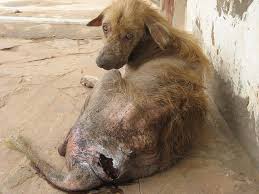
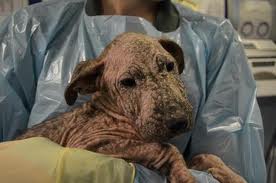
I am trying to find out what to do about a dog that has adopted us. The poor little guy must have been seriously abused because although he can be fed and will try to play some he refuses to get close enough to put flea and tick treatment on him. I know most tranquilizers are prescriptions and we can’t get him loaded up to take to the vet to be dipped and stuff. Basically I am trying to find out if there is something we can give him to sedate him so we can put drops on him and allow us to remove the ticks off of him. We don’t want to hurt him or anything just try to put some medicine on him or possible give him a pill that will eliminate the fleas and ticks if that exists.
We have the dog in question here and he is a beautiful dog and if we could ever get him to relax I think he would be a wonderful pet. He has been with us for over a year now we basically feed him and give him a place to sleep he runs at us and plays around us. I have been able to feed him from my hand but as soon as I move my hand he jumps away, we have two other dogs as well and they jumped on him in the beginning when he got close to us. I don’t know that has any impact on his not letting us be near him but I thought it might. I have given him calming tablets but I just got those from Wal-mart because we haven’t been able to take him to the vet so our vet won’t prescribe anything for him without him being there. I gave him some Benadryl yesterday trying to calm him enough to be able to get the ticks off and put medication on him but it didn’t work.
Thanks,
Pam and Ruth
FROM OUR VET
Dear Pamela and Ruth,
There is a pill called Capstar that will kill the fleas, but not the ticks unfortunately. You can put it in the food. It kills all the fleas that are on him at the time, but doesn’t have a residual effect. There is another pill called Program that you can feed him once a month that makes the fleas on him sterile so they can’t breed.
A product called Dectomax (Moxidectin) – used in some Heartworm medications and also as a sheep and cattle product can be given orally. It is usually used for internal worms but does have some effect against external parasites as well. Use with care in collies. Your vet should carry it. You can also try putting flea powder on his bedding, which would treat the environment he sleeps in as well as some parasites on his body of the so he doesn’t keep getting reinfected.
Many vets do carry natural calming pills – products like DAP (which you can plug into the wall or spray) release calming chemicals that will be inhaled by your pet. You should also be able to purchase these over the internet – I know that some of the people that advertise on my site carry these drugs.
Also homeopathic preparations such as “rescue remedy” or herbal products will be carried by your vet and/or your pharmacist.
I will send your email to our behaviorist who may be able to give you some tips on how to calm him down or get him to trust you more.
thanks!
Dr. Claire Demmer
Veterinarian
MRCVS
BVSc (Hons)
www.yourownvet.com
FROM OUR BEHAVIORIST
Hi Pam and Ruth,
It is always very sad when a dog is abused and it can take a very long time to get the dog to trust a human again. I would suggest that you could get some homeopathic medicine to calm the dog down. Rescue remedy is good and there is a product here in South Africa called Eco-Fear. It is liquid so you can put it in the dog’s water and it will be taking it every time it drinks. Rescue is also liquid but there are pills as well. Nutricalm or Mello Mutts are both homeopathic products that help to calm dogs down.
If you can sit on the floor and using food get the dog to come to you and feed it to gets its trust. Then when it is ok being close to you, you can slowly rub your hand over the dog. When it is calm with your rubbing your hand you can maybe get the dog to sit quietly when putting the drops on the dog.
It is not a quick process and you might consider getting a very strong sedative from the vet to knock the dog out completely and while it is very drowsy put the medication on the dog. This way the dog really won’t know what is happening and then you can win its trust for the next time to need to do the treatment.
It’s a pity that your dogs jumped on him when he came close – they were telling him that they are higher in rank and now he knows this he is reluctant to come close (hierarchy in dogs is absolute).
Is there any chance that your vet would come out to see the dog and help you this way. I have a very good relationship with my vet and he comes to my house when asked – recently my GSD collapsed and the vet came and saw her and then took her to the vet to put her on a drip. Perhaps ask your vet and see if he/she is prepared to come out. I really believe that this dog needs to be really tranquilized and then seen to.
Regards,
Kathy Clayton
Accredited Companion Animal Behaviourist &Professional Dog Trainer
011 783 3042 082 454 1750
kcdogs@global.co.za
www.kcdogschool.co.za
http://www.kcdogs.stemtechbiz.com